The term stones are refer to natural rock after their removal from the earth's crust.The significance of stone as a building material is illustrated by widespread prehistoric evidence and its sophisticated use in the early civilisation of the world,including the Egyptians,Incas of Peru and the Mayans of Central America.
Geologically,all rocks can be classified into one of three groups:igneous, sedimentary or metamorphic,according to the natural processes by which they were produced within or on the earth's surface.
For construction work,stone specification to BS EN12440:2008 required the specific petrological family as defined within the standard BS EN 12670:2002,the typical colour range and the place of origin.The latter should be defined as detailed as possible,including the location of the quarry,its nearest town,the region and also the country.
Stone can be classified as natural and artificial stone:
Natural Stone
1)Igneous Stone
- early founded rock(oldest rock in the world)
- also known as fire rock due to in GREEK igneous means fire
- can be classified by texture.
Example of igneous stone are granite& their properties:
-medium to coarse-grained texture
-various of colour (pink to grey)
-little porosity (0.2-4%)
-co-efficient of expansion for granite varies
(4.7*10-6 - 9.0*10-6 inch*inch)
-hardest building stone so it used well

-contain 3 main types :
(a)Limestone:-made by calcium carbonate or of a mixture of
calcium(Ca) and magnesium carbonates(MgCO3)
-resistant to weather impact
-soluble in water
-hard and strong
-easily dissolved in acids
 Limestone
Limestone Quarry
(b)Sandstone-classic sedimentary rock
-fragments of minerals, rocks or fossils held
together by a mineral cement.
-formed by sand burial and quartz, calcite or ironoxide is precipitated from ground water
-many colour due to percentage of the binding
material (red, green, yellow, pink, gray and white)
-it may form different types of sandstone:Siliceous sandstones

Calcareous sandstones

Dolomite or magnesium sandstone
3)Metamorphic Stone
-formed by original material by pressure and heat.
Original Material | Metamorphic stone |
Clay | Slate |
Limestone | Marble |
Sandstone | Quartzite |
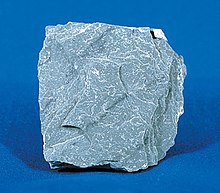
(a)Slate -dense hard stone with closely spaced planes of cleavage.
-easily split into sheets.
-low absorption of water
-strong than granite for good quality product
-good electrical insulator
-usually used for paving, steeping stone in garden, picture
frame and decorative clock
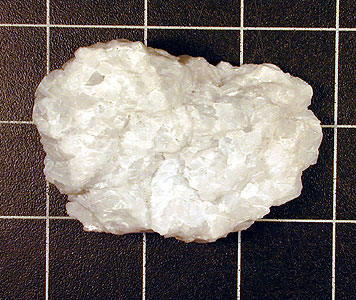
(b)Marble-metamorphic stone that crystallised again by limestone
-white, pink and grey usually are the colour of marble
-Italy and China most produced the expensive marble.
-can be polish to improve the appearance
-resistance to abrasion
Slate

Marble
Artificial Stone
-also named as engineered stone and man-made stone
-can be make by :Type III Portland Cement
:Lightweight aggregates/coarse sand
:Cement additives
:from natural stone(calcareous stone material&
siliceous stone materials)
-Below are the video about how artificial rock have been made in
factory:
-The following link to facebook simply explained about artificial
stone history:Artificial-stone
ADDITIONAL NOTES FOR STONE HISTORY
Dry Stone Stacking
The earliest form of stone construction is as known as dry stone, or dry stacking. These are freestanding structures such as field walls, bridges and buildings. These are irregularly shaped stones and they are carefully selected and placed so that they fit closely together without slipping. The structures are wider at the base and taper in as height increases. The weight of the stone pushes inwards to support the structure, and any settling or disturbance makes the structures lock together and become even stronger. Dry stone structures are highly durable and easily repaired. Water is allowed to drain through them, without causing any damage to the stones. They do not require any special tools, only the skill of the craftsman in choosing and placing the stones.
Stones Masonry
Traditional stone masonry evolved from dry stone stacking. Stone blocks are laid in rows of even or uneven height, and fixed in place with the mortar, a cement or lime mixture pasted between the stones. The building stones are normally extracted by surface of quarrying, drilled and split using diamond saws or iron wedges then shaped and polished according to their requirements. The basic hand tools used to shape stones are chisels, mallet and a metal straight edge, but mordern power tools such as angle grinders and compressed air-chisels are often used to save time and money.
Traditionally stone masonry is rarely used today, because stone is expensive to quarry, cut and transport, and the building process is labour and skill-intensive instead.
Most modern stonework ultilises a veneer of stone which is thin, flat and pieces glued against a wall of concrete blocks. This is known as veneered stone or stone cladding.
Slipform stone structures are a cross between veneered masonry and traditional masonry. Short forms around 2 feet tall are placed on either side of the wall, to serve as a guide for the structure. Stones are placed inside the forms with flat face out, and concrete is then poured behind the rocks to hold it together. Stone buildings can be constructed quickly and easily with this method.
Sustainable Stone
Stone is a highly durable, low maintenance building material with high thermal mass. It is available in many shapes, sizes, colours and texture, and can be used for floors, walls, arches and roofs. Stone blends well with the natural loandscape, and can easily be recycled for other building purposes. But is stones a sustainable building solution? To meet sustainability standards, steps must be taken to ensure that the stone is found on site, reclaimed from nearby demolished buildings or sourced from a local stone quarry. Only then can stone be considered a true example of a sustainable building material.
TYPES OF THE BUILDING STONES
| Local name | Geological name | Age | Location |
|---|---|---|---|
| Draycott Marble | Dolomitic Conglomerate | Triassic | Draycott and surrounding areas |
| Carboniferous Limestone | Carboniferous | Widespread local use | |
| Downside Stone | Lower Lias Group | Early Jurassic | North of Shepton Mallet |
| Chilcote Stone | Lower Lias Group | Early Jurassic | Horrington and Chilcote area |
| Doulting Stone | Inferior Oolite | Mid Jurassic | Doulting, Shepton Mallet |
| Bath Stone | Great Oolite Group | Mid Jurassic | Bath and Bradford on Avon |
 |
Bath Stones:
-Obtained from Combe Down
-It is a freestone,that is one that can be sawn or 'squared up' in any direction,independently in its joints
-Golden coloured,granular limestone
USES OF STONES
When one thinks of stone, its use in famous buildings probably first comes to mind, but few people probably realise that stone in some form enters our lives probably a hundred times even before we leave the house each day. Five main groups of uses can be identified:
- Building and decorative stone – stone used for its resistance to weather or its aesthetic appeal – walls and decorative purposes. Buildings, walls, paving slabs.
- Aggregates – stone used for its strong physical properties – crushed and sorted into various sizes for use in concrete, coated with bitumen to make asphalt or used 'dry' as bulk fill in construction. Mostly used in roads, concrete and building products.
- Industrial purposes – limestone can be used for its chemical (mainly alkaline) properties as calcium carbonate (CaCO3) in farming and manufacturing industry.
- Lime burning (calcining) – limestone when heated to a high temperature breaks down into lime (calcium oxide) and carbon dioxide gas. It can then be used as a more powerful alkali than limestone (see above) or used as a cement with sand, to make mortar, or as a soil improver in agriculture.
- Cement – if limestone (or its variety chalk) is mixed with clay or sandstone before firing, it can produce Portland cement which when mixed with aggregate makes concrete.
MANUFACTURE PROCESS OF THE STONE
A mixture of the raw materials; crushed stones and the bonding agent (cement or sometimes polymers), is compacted by vibration under vacuum to produce:
1. Slabs (tiles)
Where thin mono layer tiles of the required sizes are produced.
2. Large-sized blocks
These blocks are then cut into slabs to be transformed into finished
products with the required sizes.
1. Slabs (tiles)
Where thin mono layer tiles of the required sizes are produced.
2. Large-sized blocks
These blocks are then cut into slabs to be transformed into finished
products with the required sizes.
AGE OF STONES
The Stone Age is a broad prehistoric period during which stone was widely used in the manufacture of implements with a sharp edge, a point, or a percussion surface. The period lasted roughly 2.5 million years, and ended between 4500 and 2000 BC with the advent of metal working. Stone Age artifacts include tools used by humans and by their predecessor species in the genus Homo, as well as the earlier partly contemporaneous genera Australopithecus and Paranthropus. Bone tools were used during this period as well, but are more rarely preserved in the archaeological record. The Stone Age is further subdivided by the types of stone tool in use.
The Stone Age is the first of the three age of system of archaeology, which divides human technological prehistory into three periods:
- The Stone Age
- The Bronze Age
- The Iron Age
